


Maybe you’ve been in therapy and found it was helpful but didn’t lead to the kind of lasting change you are hungry for.
You may have tried therapy, practiced yoga or meditation, attended retreats or workshops, done your own personal growth work, or gone down numerous self-help rabbit holes. You may have learned a lot about yourself through books, podcasts, or YouTube.
And yet, you sense there is more.
Why is change so hard?
Humans are wired for change. If you’ve heard of neuroplasticity, that’s what it’s all about: the brain’s capacity to form new patterns, which leads to new thoughts, feelings and behaviors. So, why is it so hard?
We are wired for change, but we are also wired for habit. It’s a way for our brains to be efficient. This is great because we don’t have to re-learn to tie our shoes every day, but it also means we can get stuck on autopilot in ways that hold us back.
You can see the patterns that keep you stuck but still find yourself pulled into them. There is a lot you understand about yourself, but you long for change that feels deeper, more embodied, and has a bigger impact on your life.
Somatic therapy dives under the surface, disrupts old patterns, and leads you somewhere new. It taps into our innate ability to change by working with the nervous system, the body, and the non-verbal ways we carry our experiences and express ourselves.
At Movement Matters, somatic therapy is at the center of everything we do.

Because we want you to know, not just in your thoughts, but in your body, that change is possible.
If you know you want therapy that brings mind and body together, you’re in the right place. Learn how to get started. »
What Is Somatic Therapy?
Somatic.
From the Greek soma, meaning body.

We live our lives through our bodies. When we feel sad, we can have a hollow pit in our stomach. When we’re happy, a surge of warmth might flow from our feet to our face.
Somatic therapy is a broad term for healing approaches that support mind-body integration and well-being.
Somatic therapies include modalities such as bodywork, somatic movement practices, breathwork, and yoga therapy that are not expressly psychotherapy.
The focus of this page and our work at Movement Matters is somatic psychotherapy, a form of somatic therapy that integrates body-centered approaches within a psychotherapeutic framework.
On this page…
When we use the term somatic therapy here, we’re referring specifically to somatic psychotherapy.
Throughout the rest of this page, we use the terms somatic therapy and somatic psychotherapy interchangeably.
Somatic Psychotherapy
Somatic psychotherapy intentionally includes the body and nervous system in the therapeutic process.
It builds on traditional talk therapy by integrating body-centered approaches that help us pay attention to how the body and mind work together. It draws on neuroscience, trauma research, attachment theory, mindfulness, and body-based psychology.
There are different approaches within somatic psychotherapy. Two of the most well known are Somatic Experiencing and Sensorimotor Psychotherapy.
At Movement Matters, Sensorimotor Psychotherapy is our primary somatic therapy framework, woven together with movement psychotherapy, mindfulness-based psychology, and other creative, expressive arts, and experiential approaches.
The messages we get from our body are not separate from our psychology; they are part of it.
When we work not just with the stories of our lives, but with our experiences, it brings therapy alive.
From Insight to Experience
Somatic therapy is an experiential approach which means we go from “talking about” experiences to working with the ways that thoughts, emotions, and the body are interrelated, all playing a role in how we think, feel, and move through life.
How we work with you depends on your interest, comfort level, and goals.
By working with the body, breath, posture, sensations, nervous system responses, and movement, we get more information about what is beneath the surface.
We can get creative about making lasting change.

Our Approach At Movement Matters
Sensorimotor Psychotherapy is at the heart of our somatic work at Movement Matters. It provides a shared foundation for all our therapists. Each therapist also has additional training, experience, and interests that shape their unique approach.
Our therapists’ backgrounds include movement psychotherapy, mindfulness-based psychology, expressive and creative arts therapies, and other experiential approaches such as EMDR, parts work, and polyvagal-informed therapy.
Our work is active, creative, and deeply personalized.
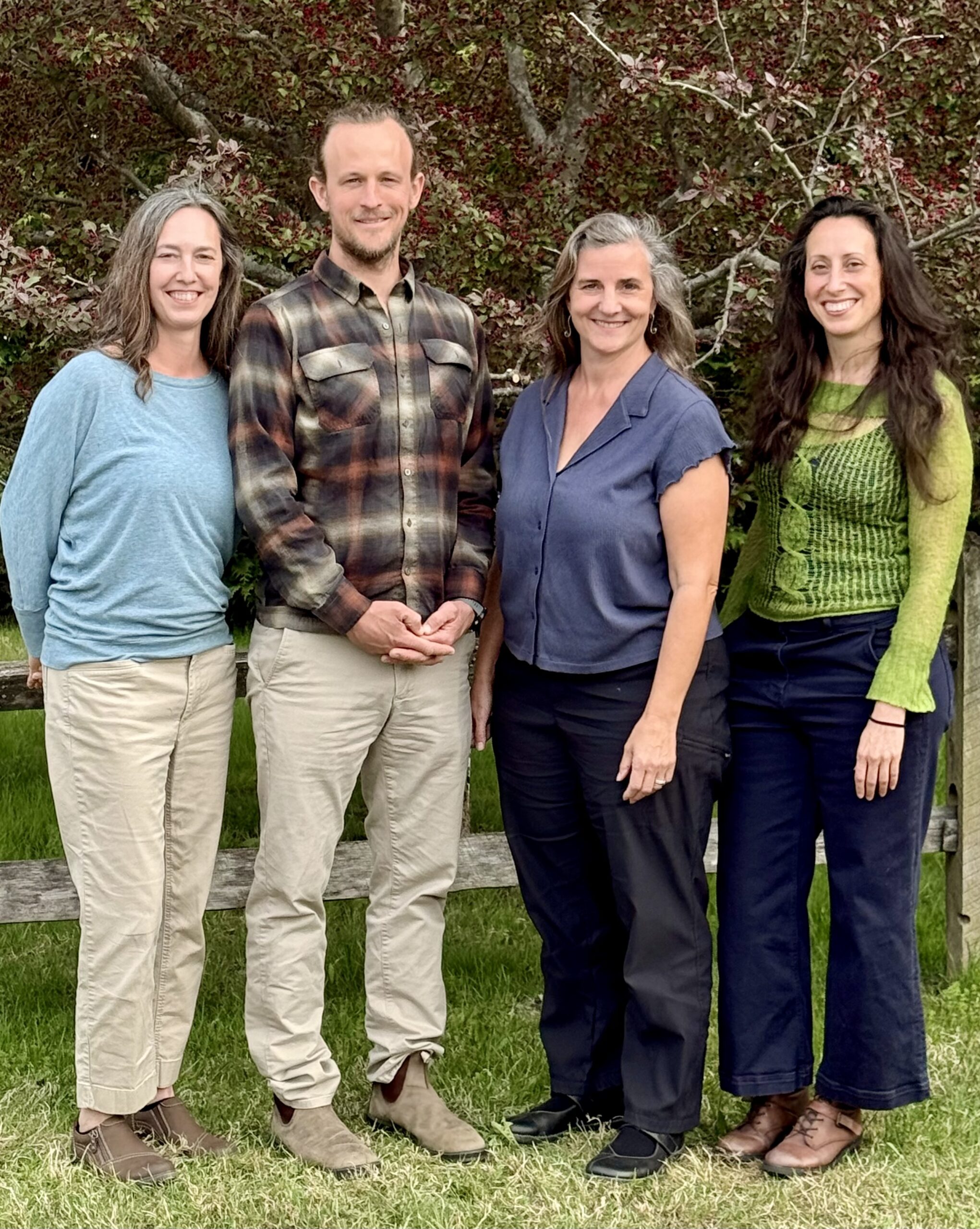
We don’t believe healing comes from following a rigid formula or from insight alone. We believe it emerges through curiosity, connection, experimentation, and the discovery of new possibiliites for being yourself.
A Therapy Example
In our work together, we might notice that when you talk about a difficult conversation, your shoulders tighten and your breath gets shallow. We slow down and get curious about what your body is responding to.
We might find that your tension goes along with a familiar feeling that people don’t really listen to you. There might be sadness underneath, or anger, or the impulse to protect yourself from being hurt again. So, you wall off.
We might explore what it feels like to notice that in this room right now, someone is listening to you with care and attention. When you try letting your shoulders drop and sitting a little more open, you find you can take in the support rather than bracing against it. And then you can share your feelings more and learn to trust that it’s ok to try something new.
How Somatic Therapy Works
When we talk about things, we are working with what we know consciously and can put into words.
This is top-down processing. And it’s valuable. But a great deal of our experience takes place without conscious awareness.
Our life stories are expressed through posture, gesture, and movement.
Through the way we feel tense when we say yes to something we don’t want to. In the way we exhale with relief when we get home after a stressful day. In how we push through tiredness or pain because we don’t feel we deserve to relax.
Somatic psychotherapy pairs top-down and bottom-up processing by working with the non-verbal level of experience.
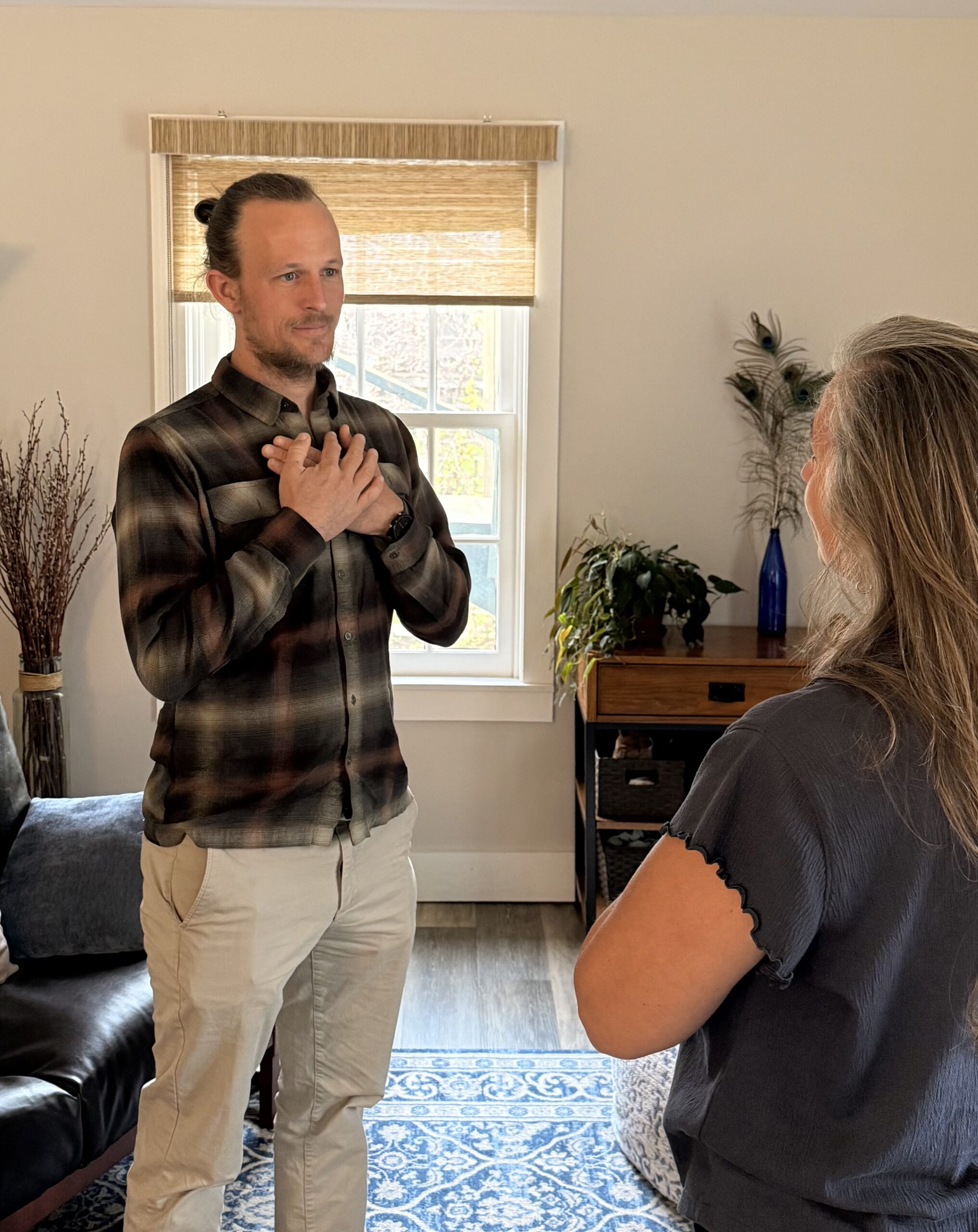
It helps us slow down and pay attention to ourselves through body sensation, nervous system cues, and movement.
With a somatic approach, you can connect more deeply to what you know intuitively. You can discover more about how you actually feel, what drives you, and what you want. You can begin to move through life differently.
Talk therapy helps you understand your patterns.
Somatic therapy helps you change them.
Lasting change happens when your body can relax in a situation that used to trigger you. When you find yourself responding instead of reacting and you can trust your instincts with more ease.
It happens when you feel more connected to yourself and more at home in your body. When you develop a new sense of who you are and you feel it deep in your bones.
What Happens in a Somatic Therapy Session?
There’s no such thing as a “typical” somatic psychotherapy session.
Some sessions might look a lot like a typical talk therapy appointment, therapist and client sitting across from one another having a conversation, tea mugs and tissues on hand.
Other sessions might be very active, working directly with posture, gesture, or movement, seated or getting up and moving in the space.
What’s different in somatic therapy is that we aren’t just paying attention to the content of the conversation. We’re interested in how the body and the nervous system participate.

A session might include:
- Learning grounding techniques to shift your state when you feel anxious or triggered
- Exploring what it feels like to take up more space, expand your breath, or move with more purpose and energy
- Recognizing that your torso collapses when you talk about a difficult argument and seeing what it’s like to remain taller and more open
- Noticing how your eyes light up when you allow yourself to share something good and let yourself feel it
At Movement Matters, our therapy sessions include mindfulness, breathwork, movement, and creative or expressive approaches to help you slow down, listen to yourself, consider what’s possible, and work with what’s actually happening right here and now.
What’s the Difference Between Somatic Therapy and Talk Therapy?
Talk therapy and somatic therapy aren’t opposites; they are complementary.

Somatic psychotherapy works with non-verbal and body-based experiences along with talking.
The amount of talking about thoughts and feelings in somatic therapy varies by approach and by therapist.
At Movement Matters, we make use of verbal “top down” processing along with experiential “bottom up” work, such as exploring images, body sensations, posture and movement.
When you integrate both verbal and body-based work, change becomes more coherent.
You begin to shift the way you perceive things with your brain and your body, and your patterns and habits start to change. You begin to move through your life differently.
Somatic Experiencing & Sensorimotor Psychotherapy
Two of the most well-known somatic therapy approaches are Somatic Experiencing (SE), developed by Peter Levine, and Sensorimotor Psychotherapy (SP), developed by Pat Ogden. Both are trauma-informed, body-centered, and grounded in neuroscience.
Somatic Experiencing (SE)
SE primarily targets trauma healing. It places a large emphasis on nervous system regulation and completing interrupted survival responses that keep people stuck in trauma patterns. While SE is not explicitly a psychotherapy modality, it is widely used by psychotherapists as an integral component in their somatic psychotherapy work.
Sensorimotor Psychotherapy (SP)
There is a large overlap between SP and SE, particularly in working with trauma. Sensorimotor Psychotherapy grew out of the Hakomi Method and is sometimes described as a “body-based talk therapy”. It is explicitly a psychotherapeutic framework that not only addresses trauma but also focuses on attachment, relational patterns, and current life issues.

The Landscape of Somatic Psychotherapy
Beyond Somatic Experiencing and Sensorimotor Psychotherapy, there are many other somatic and mind-body approaches.
Somatic psychotherapy can also be integrated with many other therapeutic approaches. Many therapists combine somatic concepts and practices with modalities such as EMDR, Brainspotting, and Internal Family Systems (IFS), as well as expressive and creative arts therapies, movement psychotherapy, and other experiential approaches.
Polyvagal Theory has contributed to contemporary thinking about the nervous system’s role in healing, connection, and resilience, influencing somatic, body-centered, and trauma-informed approaches.
With Somatic Therapy, You Can:
Reconnect with yourself, your vitality, and your creativity
Feel more at home in your body, with greater ease, energy, and self-trust
Build relationships with joy and connection without losing yourself
Feel more free to be yourself in your relationships, work, and daily life
Feel less trapped in cycles of overthinking and more connected to your own instincts and experience
Pursue your dreams and desires with greater clarity, flexibility, and confidence
Show up for yourself the way you care for everyone else
What Somatic Therapy Helps With

Somatic psychotherapy can help with many types of challenges. It is very adaptable and can be approached in many different ways.
Some people arrive eager and ready to dive in. Others may feel a little hesitant or unsure.
What matters most is working with a therapist who can meet you where you are, adjust the pace and focus to your unique needs, interests, and comfort level.
Below are some of the issues we work with most often. We are also happy to explore your particular concerns to see if we’re a good fit.
Trauma, Complex Trauma & PTSD
Trauma is experienced in the body.
Long after traumatic events or situations have passed, it keeps showing up — in startle responses, hypervigilance, agitation, numbness, or a sense of feeling like a stranger in your own life.
Somatic therapy works directly with these responses, helping you feel safer, more regulated, and more at ease in yourself.
High-Functioning Anxiety
Anxiety is a nervous system state as much as a thought pattern, even when you don’t realize it.
Thoughts that keep you “on” all the time are often a protection against emotions and sensations.
Somatic therapy works with your whole experience, so that you can still be productive, but with more ease, calm, and satisfaction.
Depression
Depression and anxiety often overlap, one pushing you to be constantly on, the other leaving you feeling flat, disconnected, or like the color has drained out of life.
Somatic therapy works at the level of the body and nervous system, helping you find your way back to being present, engaged, and more fully yourself.
Burnout & Loss of Self
Burnout isn’t just tiredness; it’s running on empty over time.
Your brain and body signals get lost, and it becomes hard to know what you need or even who you are underneath it all.
Somatic therapy helps you restore balance, reconnect to yourself, and rediscover a sense of zest and vitality.
Life Transitions
When you’re facing a transition — a relationship ending, a change in school or work, a new family structure, a decision to change something big about your life, or even just the sense of time passing — it can feel disorienting.
Somatic therapy can help you feel grounded and centered, even if you don’t yet know where you’re headed or how to get there.
Self-Worth & Embodiment
We relate to ourselves through our bodies.
The way we sit, stand, move, even where we look or how we speak all express something about how we feel about ourselves.
Somatic therapy helps you listen to those signals with curiosity and self-compassion, so that you can feel more at home in yourself.
Chronic Pain & Stress-Related Symptoms
Chronic pain and stress-related symptoms add a constant layer of distraction and discomfort.
Even when you’re good at pushing through, pain demands your attention and drains your energy.
Somatic therapy can help you change your relationship to your body, find more self-compassion, and lessen the extra suffering that comes from struggling.
Learn more about working with chronic pain and stress-related symptoms. »
Therapy for Women
Anxiety, burnout, and chronic stress often show up differently in women, who also carry the weight of expectations, the emotional labor of relationships, and the pressure of holding it all together.
Somatic therapy helps you reclaim yourself — creating space to breathe, to be yourself, and to build a life filled with joy and connection.
Therapy for Men
There are so many ideas about how men are “supposed to” handle things — think your way through problems, stay in control, keep it together.
There’s a cost to that, and it often leaves you feeling tense, pressured, and worn out.
Somatic therapy offers a way to go deeper than problem-solving, and helps you build a life that feels more like your own.
Relationships & Relational Patterns
We form relational patterns through non-verbal interactions long before we learn to speak.
We develop maps that we follow in relationships, often without even realizing it, which is why the same patterns keep showing up.
Somatic therapy helps you notice what’s happening beneath the surface and build more satisfying relationships.
At Movement Matters, we address relational patterns through both individual and couples therapy.
Creativity & the Arts
Creativity lives in the body.
It shows up in the urge to make something, the willingness to be messy, the energy that fuels ideas, the sense that something new is possible. When life gets in the way, we can lose connection to our creative and artistic drive.
Somatic therapy can help you find your way back to the creative part of you that can take risks, play, and go somewhere new.
If something here resonates, we’d love to talk with you about whether we’re a good fit.
Ways to Work With Us
Somatic therapy is the foundation of all our work. We tailor it to your unique challenges, interests, and goals.
We welcome clients of all identities, backgrounds, and orientations.
Individual Therapy
For adults and older adolescents.We dive in with you to help you get more in sync with yourself and live more fully. Learn more »
Couples Therapy
For couples who want to find new ways to connect, navigate challenges, and move through life together. Learn more »
Walk & Talk Therapy
Combining somatic therapy with nature can support greater presence, perspective, and movement. Ask about Walk & Talk »
Somatic Therapy Intensives & Retreats
The richness and depth of somatic therapy make it well suited for therapy intensives, which offer extended, immersive sessions that allow for deeper work in a concentrated period of time.
Intensives at Movement Matters are available in person in Great Barrington, MA with limited online options.
We’re ideally located for people to travel from New York or Boston for a retreat-style therapy intensive in the Berkshires. Learn more »
In-Person & Online Somatic Therapy
Movement Matters in Great Barrington, MA offers both in-person therapy and telehealth. Somatic therapy can be very effective when done online.
The body is present wherever you are, and we bring our creativity online to support your process. Clients find that online work feels surprisingly connected and present.
Get started with online somatic therapy in Massachusetts, New York, Vermont, Maine, and Florida. Ask about options»
Is Somatic Therapy Right for You?

Somatic therapy may be a good fit if you’re drawn to a deeper, more experiential way of working. One that builds on insight by including the wisdom of the body.
Whether you’re beginning therapy or looking to deepen work you’ve already done, somatic therapy offers another way of understanding yourself and creating lasting change.
When therapy includes a creative embodied approach, a different kind of change is possible.
You begin to experience your life in new ways, develop more trust in yourself, and strengthen your connection to what matters most.
You discover a renewed sense of being fully alive that carries into your relationships, your work, and your everyday life.
You’re ready for therapy that leads to deeper change. Let’s talk.
Frequently Asked Questions About Somatic Therapy
What is somatic therapy?
Somatic therapy is a body-centered approach to psychotherapy that works with the nervous system, physical sensations, movement, and body awareness as core elements of healing.
Rather than focusing only on thoughts and emotions, we pay attention to the whole experience including sensations in the body, nervous system patterns, and how posture and movement reflect our emotional and relational experiences. It draws from neuroscience, trauma research, and attachment theory. Somatic therapy goes beneath the surface to work with the things we can’t just “talk our way out of.”
Learn more about Sensorimotor Psychotherapy, a foundational approach at Movement Matters »
How is somatic therapy different from talk therapy?
Somatic therapy adds a new dimension to talk therapy. It works with the ways the body and nervous system are an integral part of who we are and how we relate to ourselves and other people.
Talking is a part of somatic therapy; what’s different is that we’re also tracking your body’s responses, experimenting with changing your posture and movement habits, developing embodied resources, and prioritizing nervous system regulation. Somatic therapy changes the way you feel about yourself and your life.
Who is somatic therapy good for?
Somatic therapy is a good fit for a wide range of people and concerns. It’s well-suited for trauma, anxiety, depression, chronic stress, nervous system dysregulation, and issues where the body is part of the picture.
Many people who want something different from traditional talk therapy are drawn to the holistic, mind-body approach that somatic therapy offers. Somatic methods can be subtle, such as noticing breath or tension, or more active and expressive, such as working with movement or gesture. A skilled somatic therapist adapts their approach to fit each person’s comfort level, interests, and what they are working on.
Does somatic therapy help with trauma?
Trauma is a body-based experience, making somatic therapy ideally suited to support healing. Survival responses from trauma impact the nervous system and drive symptoms long after the trauma has passed. Somatic therapy can address trauma resulting from single overwhelming events as well as ongoing or complex trauma.
Somatic Experiencing and Sensorimotor Psychotherapy were both developed to work with the physiological aspects of trauma and the ways they impact our emotional experience. With somatic therapy, you can do more than make sense of the story. You can feel, in your body, that the trauma is over and in the past.
Does somatic therapy help with anxiety?
Somatic therapy can be a highly effective approach for people with anxiety because it works directly with the nervous system and the mind-body connection. Anxiety affects the body as much as thoughts and emotions, sometimes even when you don’t realize it.
Somatic therapy can be especially helpful for high-functioning anxiety, chronic stress, anxiety with strong physical symptoms, or anxiety that feels stuck even with therapy. Clients can learn to get out of their heads, feel more grounded, and live more fully.
Is somatic therapy evidence-based?
Somatic therapy approaches, including Somatic Experiencing and Sensorimotor Psychotherapy, are grounded in neuroscience, attachment theory, and trauma research.
These methods are endorsed by leading clinicians and experts worldwide. There is a growing body of research supporting their effectiveness, particularly for trauma, PTSD, and anxiety. And in clinical practice, clients experience real and lasting change.
Is somatic therapy the same as Somatic Experiencing?
Somatic therapy and Somatic Experiencing are related, but they aren’t the same thing. Somatic Experiencing, developed by Peter Levine, is one specific somatic therapy approach.
Somatic therapy is a broader term that encompasses Somatic Experiencing and other body-centered approaches including Sensorimotor Psychotherapy, developed by Pat Ogden, the Hakomi Method, and others.
At Movement Matters, Sensorimotor Psychotherapy is our primary framework. If you came here searching for Somatic Experiencing, we’re happy to talk about how our work compares, and whether it might be a good fit for you.
Are EMDR or Internal Family Systems (IFS) forms of somatic therapy?
EMDR and Internal Family Systems (IFS) both work with the nervous system in different ways and share important similarities with somatic therapy. The way they’re practiced can vary quite a bit, and both can be approached through a body-centered, somatic lens.
EMDR (Eye Movement Desensitization and Reprocessing) helps the nervous system process experiences we haven’t been able to move past. Internal Family Systems works with the different parts of us to help us understand and communicate better with ourselves.
At Movement Matters, we weave in concepts from EMDR and IFS to support clients’ needs and goals.
Can somatic therapy be done online?
Yes. Somatic therapy can be very effective online. The body is present wherever you are, and telehealth work can be unexpectedly creative and connected.
At Movement Matters, we offer online somatic therapy in Massachusetts, New York, Vermont, Maine, and Florida.

About the Author
Annabelle Coote, MA, LMHC, BC-DMT has been practicing somatic, body-centered, and creative approaches to psychotherapy for over 25 years. She is a licensed mental health counselor, certified Sensorimotor Psychotherapist, and board-certified dance/movement therapist. She is the founder and director of Movement Matters Integrative Psychotherapy. Annabelle loves weaving together the art and science of therapy.
Movement Matters offers in-person therapy and intensives in the Berkshires, Western Massachusetts, as well as telehealth across Massachusetts, New York, Vermont, Maine, and Florida. Clients can combine in-person and online sessions.
We welcome clients of all identities, backgrounds, and orientations.